
VamoSites: Hallowed to Hollowed Grounds + CA Beaches.📌
Scenery and serenity—parks and places we go to get right, recreation, relaxation or just get away.
 So we shall cover the grandeur and sheer beauty and inspiration of these hallowed lands, as well as events, efforts or conditions that augur to hollow them out.
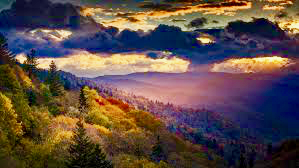 This could include wildfires threatening park treasures and other environmental woes, litter-al overcrowding, noise or material pollution, abusive desecration, overwhelmed reservations. A recent National Parks Association report cites 401 of the national parks are plagued by significantly unhealthy air pollution, “threatening the very existence of namesake” parks from Glacier to the Everglades. It’s not simply climate change, for we are also loving special places and ceremonies to damage or death, while other sites are withering through lack of visitation and support (Dispersion, hello!).
Witness this summer’s public storming of U.S. national parks—huge visitation increases, from the Adirondacks to the Rockies, Yosemite and Yellowstone.
Particularly ‘over discovered’ have been Utah’s “Mighty Five” (Zion, Arches, Canyonlands, Capitol Reef and Bryce Canyon), which altogether have grappled with a 68% visitor increase since 2013. The Beehive State’s erstwhile “relaxed getaways” have been “loved to death” of late, with facilities/infrastructure straining and nearby gateway communities overwhelmed.
A disturbing outcome of this Beehive swarm is the recent overturning of a packed tour van en route to Bryce Canyon with 30 Chinese tourists—killing at least four and seriously injuring over a dozen more. The limousine-style bus, operated by California-based  America Shengjai, was said by a Utah Highway Patrol spokesperson to have run off an open stretch of State Road 12 and rolled into a guardrail. Several Chinese international students from Southern Utah University were rushed in from 90 miles away to translate for first responders attending to the crash victims who spoke little or no English. The tour bus operator apparently has a clean safety record thus far, but investigations by local and NTSB authorities are well under way. (MTC…)
All 419 national parks, including monuments and historic battlefields, have posted 16% visitor gains over the past five years—problem being they all seem to come at much the same time. Even relatively smaller parks such as Indiana Dunes have been flooded with ‘rush hours’ clotting like never before, while other quality, fascinating destinations sit languishing and forlorn.
So time to ‘disperse’, fan out—to discover and rediscover lesser-known federal, state and local sites before they get trapped on the tourism treadmill.
On a more sociopolitical level, we probe untimely park and beach closing, the tug of war between monumental expansion and privatizing retraction, especially of Federal lands, unending budget battles, and the misconduct of park/site staffers and workers. Or the wanton scaring and stripping of wilderness areas, pillaging of World Heritage Sites.
Of no less concern will be the diminution of natural wildlife such as Yellowstone wolves and grizzlies, the lions, gorillas and elephants of Kenya and the Congo. Which is happening in the face of climate change, human encroachment or predatory hunting/poaching. 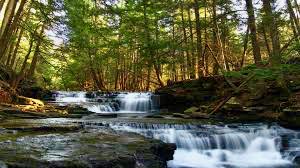
Vamigré will push back on the man-made and biological annihilation, dutifully sparing that which still makes this shrinking planet worth exploring and enjoying, passing it along healthfully to those who follow.
Along those lines, the most recent promising news is of the J. Paul Getty Trust’s pledge of $100m over the next decade to preserve and protect World Historical and Heritage Sites, which are increasingly endangered through disrepair, natural decay or hostile desecration—whether from political, religious, nationalistic or sociological conflict. (MTC…)

Beach Erosion by Design?
Funny thing happened on the way to the seashore…
Wait…whoa, not so funny, not in the least. For we have yet another instance of the attempted privatizing of 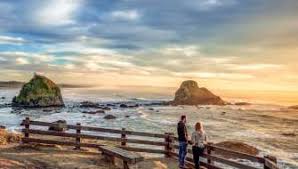 designated public (assess) lands. And once again, this grab involves the spectacular California coastline.
What began as a battle over north coast oceanfront property involving a Sonoma County development continues raging to this day. That early Sea Ranch controversy resulted in the ballot passage of Proposition 20, and the establishment of the California Coastal Commission (CCC) in 1972.
The California Coastal Zone Conservation Initiative then stipulated that all beachfront, indeed the entire coast below the mean high tide water line, was to be public land. That law further bars homes and/or developments from blocking public access to all public beaches up and down the coast. 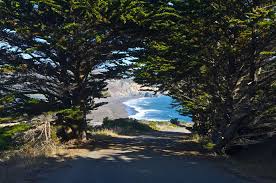
Since then, legal fights have ensued, from Humboldt County’s Shelter Cove down to Santa Barbara, Hollister Ranch and Malibu. Perhaps the most notorious recent conflict has been over Martins Beach access near Half Moon Bay. There a Silicon Valley billionaire seeks to stop the public from using a road through his property to reach the beach—a move that has drawn the wrath and litigation of combers and sightseers alike, most notably the Surfrider Foundation. But with a Supreme Court decision not to hear the owner’s appeal, it looks like public access has won the day.
Now, the coastal battleground is Opal Cliffs Park in Santa Cruz County. More specifically, at issue is free public access to Privates Beach—and a 9-foot gate and fence that is effectively stemming a tide of users/visitors, not least local nudists and surfers.
The ‘key’ to that access gate has a price tag, upwards of $100 for an entry pass—which is beyond the reach of many seeking relief from more southerly or inland heat. That fee has been collected since 2008, but has lately come under increasing scrutiny from Coastal Commission officials.
The history here is murky at best. Santa Cruz County permitted the creation of a specific district to manage and maintain Opal Cliff’s sandy Soquel Cove way back in 1949. That Opal Cliffs Recreation District, staffed predominantly by local residents, started charging an entrance fee in 1963, ostensibly to fund traffic control, trash collection and the minimizing of vandalism.
The CCC allowed a comparatively modest (six-foot) fence around the 25 x 100-foot county park in 1981, followed by a $25 (deed restriction) fee ten years later. But by 2008, the district had enlarged that fence and increased the gate fee by $80.
Neither ’08 action was approved by the Coastal Commission, which is currently considering enforcement action, determining that the district has been running an exclusionary program that is un-permitted, invalid and afoul of public access rights under the California Coastal Act, if not the state constitution. The CCC noted that Opal Cliffs/Privates is the only known public California beach that requires and collects such a fee.
The district counters that the CCC is seeking to arbitrarily, unilaterally quash all of the park’s existing permits—even though Privates has agreed to unlock the gate for free daytime summer access and charge only $5 per day for up to 10 visitors.
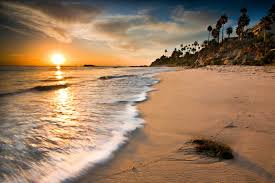
A different CA beach and time…
Coastal Commission officials recommend in reply that the district return the fence to the original six-foot height, and allow free public access overall, minus the gate monitors/guards the district has long employed.
For now, the district has pulled its latest permit application, as the CCC considers forcing the removal of all Opal Cliffs’ gate, fences and fees. There this conflict stands, drifting like plankton and algae toward the courts.
As with public-privatization fights everywhere from Utah to the Carolinas, Vamigré will be closely tracking the progress and pitfalls with reasonably unfettered access in mind. Because there is nothing at all funny about the alternative…

