
Vamilieu: Tides and Trends.
An overview of the tides and trends along travel lines, affecting, influencing Vamigrés, near and abroad, including topical non-fiction TripLit* :
(Update: 2/16/22)—Layaway or Stay Away?
It does seem quite sensibly go-able, right? Play now, pay later: Live out your travel dreams via a friendly loan, then pay the advance back in manageable installments over the months, if not years ahead.
This just-in-time financing for our vacations and adventures can be a lifeline of freewheelin’ relief and flexibility, so long as we’re not too gullible, and don’t end up tripping over that line.
Meaning such ‘getaway-layaway’ loans may come with a steamer trunk full of fine-print terms and conditions that can spell trouble for our budgets and credit scores. While a deal’s refund and cancellation policies might slow your roll, for example, the real speed bumps and break lights enter in when it comes to interest rates.
Sure, some air and cruise lines offer zero-interest loans through certain fleeting promotional packages. However most of such ‘play ⌲ pay’ plans carry rates that can rise to over 30%—saddling your trip with the baggage of heavy extra costs. Little wonder these high-interest loans are increasingly in the crosshairs of  financial regulators and consumer protection bureaus.
Pay and Pay.
In any case, major players in this ‘P ⌲P’ space are services such as Uplift (with T/T partners like United Airlines, Royal Caribbean Cruises) and Affirm Holdings (partnering with American Airlines and Delta Vacations). Both claim their plans charge fixed (mid-teens average) interest rates that are clearly declared upfront and do not compound over the life of the loan. Both also hedge that cancellations and refunds are firstly determined by the particular travel mode partners involved.
With regard to changing flight or cruise itineraries, Uplift says the initial loan payment terms remain, payments due in full over originally agreed upon schedule. Should travelers qualify for a refund or credit, Uplift won’t refund the loan interest already paid. For its part, Affirm Holdings states that if a traveler’s refund or cancellation has cleared, the company will similarly deduct any loan interest paid to date—uh-huh, time to bust out the magnifying glasses.
Point being, we pursue such loans and all their red-flag complexities at our own risk. So if going the ‘P ⌲P’ layaway route is in our travel plans, best to drill down into the details, and noodle total potential trip costs before sealing the deal.
It’s either that, or steer away from these corpo tourism ‘layaway’ loans altogether, and simply go with what we’ve got: namely, travel far more interesting and interest free. (MTC…)
Vamonomics.
Dollar signs to come: tracking now rising U.S. greenbacks (and vice-versa) against sinking currencies, from Euros, Pounds and Pesos, Francs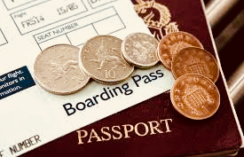 to Dinars and Dracmas, with macro oversight and micro underviews, by nations and regions. Along with the emergence of cryptocurrencies.
Politoxicity.
We will cover movements, campaigns, groundswells and eruptions–issues as they help and hinder Vamigration worldwide. To wit, the volatile U.S. campaign cycle of 2016, the Brexit fiasco and further potential E.U. dismemberment on a burgeoning, already overburdened Continent; Venezuela’s meltdown and the overall Middle East’s uncoiling of the Arab Spring.
Idiotologies.
Soon parsing, surpassing the global divide: the too-tiered segmentation of First to Third Worlds, the haves, have-nots and have-nevers. Add the vocal, sometimes violent continuum, left to right, exploring and exploiting it all for Vamigré gain…
_____________________________________________
* For starters, a T/T Tides & Trends Recap: 2010-2017:
Strandings Up, Travelers Down: Visiting (and Revisiting) a Time of Wait and Seeth.
Shrinking seats and flight capacity, rising fares, fees and taxes: 2009-17 peak-season travel = yet another no-fly zone of discontent, of carrier/customer friction and conflicting itineraries.
Some more background: Contrailing past peak-period snafus and fiascos, vacation and holiday travel continues to be a nightmare of passage on a wide variety of fronts. Heightened traffic, hellacious weather (hot and cold): the airline industry proves increasingly unprepared to adjust and bolster schedules/service to effectively meet the challenges of this seasonal double whammy.
Such wanton carrier shirking and/or shortcomings have been the unfettered flight pattern since Alfred Kahn grounded the Civil Aeronautics Board (CAB) and deregulated U.S. airlines in 1978, only to admit down the pike that he knew next to nothing about this industry at the time, couldn’t tell one plane from another, saw then as but “marginal costs with wings”. The cut-throat competition this oddball economist unleashed has been the ruin of such stalwart commercial carriers as Eastern, Braniff and PanAm—airfares dropping but passenger vs. crew discontent and discomfort soaring like never before.
Case in point: The following snowball effect: early 2010 reports had Great Britain hit by an uncommonly harsh snowstorm, catching London airports and British Airways woefully unprepared. Suddenly throngs of passengers were stranded in Heathrow terminals, a siege that stretched out over several days—waylaid holiday travelers growing angrier and more frustrated for lack of airline/ administrative remedial action or alternative transport information. Industry and government officials, feeling traveler wrath, are only now beginning to pay for their incompetence.
Then winter storm systems spread across the European continent, subjecting greatly more travelers to further delays, stranding and overall chaos—from Paris to Croatia, Helsinki to Milan and Rome. Soon airport mayhem extended to Moscow and St. Petersburg. Russian travelers, incensed by the delays and ubiquitous lack of effective airline service and information, actually resorted to physically assaulting carrier and airport staffers in reprisal.
Meanwhile, winter snow storms were paralyzing southern U.S. cities like Nashville and Atlanta, before working their way up the Eastern Seaboard, and into full-blown Nor’ Easters. Philadelphia and overall New York Tri-State airports and highways were quickly frozen under white-out blizzard conditions, the monster storm front snowballing through New England, shutting the likes of Boston/ Logan down. Air terminals and tarmacs were socked in, airlines cancelled flights, closed customer service and information lines—worst case scenario trapping passengers (mainly more susceptible international travelers) in-cabin, under rapidly deteriorating conditions, on idled, ramp-locked aircraft—federal (3-hour onboard holdover limit) rules/prohibitions and hefty fines notwithstanding.
Ominously, domestic U.S. carriers adopted a peremptory cancellation strategy in response to the D.O.T.’s new Tarmac Rule, scratching some 10,000 flights over the five-day period—sparing themselves $27,000 per-delay infraction, relegating ticket holders to seemingly interminable terminal stranding. Clearly,air transportation systems overall failed yet another holiday peak-period stress test. Indeed, JFK Airport, no less, remained unplowed/uncleared for days, as did surface-vehicle thoroughfares throughout the northeastern U.S.
Common denominator: The more traffic-heavy holidays crunch in, the more airline/travel industries’ preparation and official oversight fall short, travelers routinely facing the spectre of air, rail and bus terminals overwrought with neatly queued luggage and stuck, exhausted passengers frittering, Twittering away to no avail—snoozing on cold tiled floors. This, when fee-fattened revenue for domestic bags alone launched air carrier unit revenue and balance sheets higher and higher, steadily to solid black, sporadic flash-fire fare wars notwithstanding.
Couple these recent developments with already endemic schedule shrinkage and air-service cuts looming ever larger (the JetBlues; flu/virus bugaboos, luggage trashing/losses)—packed planes, bumping, terminal clotting and tarmac delays (flight cancellations up 91% over 2006; barely 70%+ now on-time; exacerbated by ATA, Aloha Air shutdowns). All recall 2005/6 peak-travel woes, wherein airport checkpoints backed up, shakedown searches redoubled, M-16 armed guards patrolled terminals en masse. Paris-LAX flights were detained in December-January 2004/5; D.C.-bound international flights were intercepted by F-16s. Only these days, air travelers face a carrier contraction, collapse or consolidation trifecta: i.e., serving us less while squeezing us relentlessly more.
So came a D.O.T. performance probe, much as a mission-creeping TSA once decreed hardened, pistol-packing cockpits and mandatory air marshals on U.S.-bound foreign flights. This, after US-VISIT’s anti-terror digital fingerprinting, the photographing of international travelers arriving at air and seaports—opened (Euro) Skies or no. Domestic U.S. travelers have narrowly delayed joining America’s paranoia party (being subjected to CAPPS II, TSA’s flawed biometric pre-screening system, with faulty databases, behavior detection programs, BPR and color-coded risk scores—not to mention inhospitable ESTA U.S. visitor registration procedures. TSA directives even ban liquids or lotions that may trigger checkpoint detectors—all but routinely groping grandma, while carriers fudge performance numbers, and meekly offer over private passenger data to the government.
The yield from all this has been scattered “credible chatter”, mis-flagging, lost bags, passenger- interface raps and privacy incursions. Meanwhile befuddled travelers grouse at the flight cuts, delays/ intrusions, creeping fee-lty, elusive fare-sales, info-gaps, RFID passports, tepid hotlines and slipshod screening. Many nations spurn such security overkill, with ‘hazardous’ Brazil fingering U.S. visitors for digital scanning/ID. State/local governments U.S.-wide grapple with unfunded DHS mandates, as random heightened alerts strain carriers and destinations more—not least decommissioned, de-militarized parklands, urban and rural.
While a weaker FAA faces budgetary shortfalls, unsafe coziness with struggling air carriers (especially regional feeders)–and the ‘planery’ injustice of Airbus’ A380 overloaded wing cracks or Boeing 787’s battery problems and airworthiness delays. And while the NTSB crash/safety investigations seem to drag on interminably under cross pressures without rulings, or Malaysian Airlines flight 370 remains inexplicably unfound.
After years of peak insecurity and false alarms, DHS color codes are fading to simpler, binary alerts. But amenity cuts, tense security tangles, information embargoes, safety gaps, anti-terror debates persist—civil liberties vs. incivil surveillance; shoe/BVD-rigged suicide bombers, air marshal law, jetway injustice—more or less shadowboxing enemies unseen and unknown.
Such issues, plus DHS/DOT security industry vested interests, roller-coaster fuel costs; high fares, onerous fees/low service squeezes; tarmac, taxi, runway hazards; napping air traffic controllers, weather/gridlock delays will intensify, Passenger Bill of Rights (a bill of goods?) or no. Meanwhile, disease outbreaks will continue to threaten and plague us closely sardined travelers.
Today, a post-recession public braces for, and will brave holiday transport. Travelers warily hope that neither a regionally sluggish economy, sky tight and vulnerable supply nor seasonal storms will deter them (whether going by air, rail or automobiles, even with gas prices rising anew). That is, until many meet up with the gauntlet of air terminals, security lines and stretched thin, vulnerable capacity—glowing D.O.T./Purdue/Wichita State academic appraisals notwithstanding. Moreover, if current websites, apps and legacy media were up to these challenges, travelers wouldn’t be so awash in pervasive tourism rip-offs, rackets, runarounds and roadblocks these days.
So, through it all, let us never lose sight of the fact that we’re ultimately the ones plucking down our hard-earned dollars/dinero/Euros, etc. here and there, resolutely planted in the driver’s seat, with firm hands on the controls—Vamigré leading the way… 

